Space Technology
The Invisible Ground: How AI & GSaaS are Virtualizing the Satellite Economy

Nandeeshwar
March 30, 2026
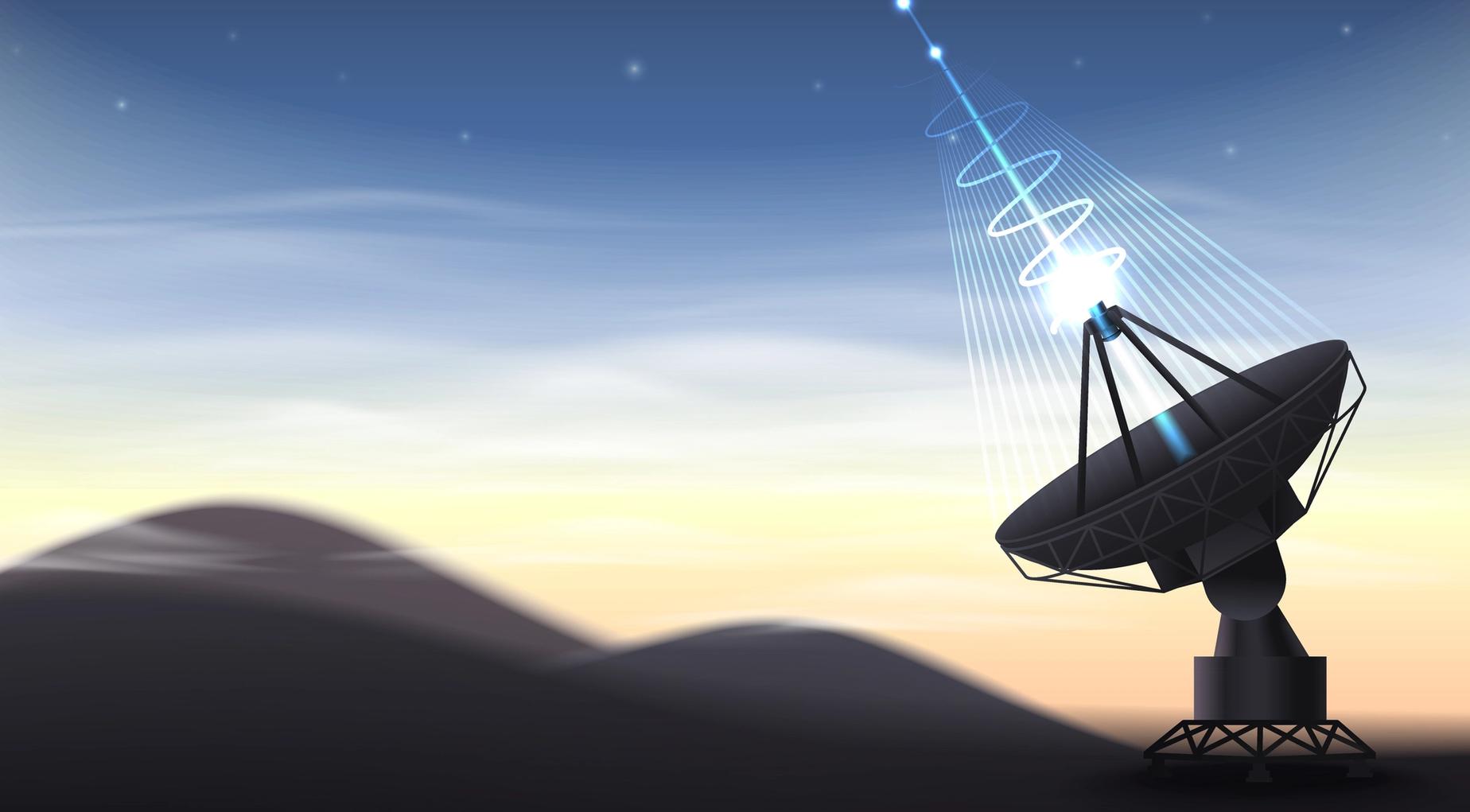
Think for a second about the last time you checked a weather app, used GPS to find a coffee shop, or watched a livestream from halfway across the globe. We usually picture satellites-those lonely metallic birds drifting in the dark-doing all the work. But there’s a silent hero in this story that we rarely talk about: The Ground Station.
For fifty years, ground stations were the "fortresses" of the space industry. They were massive, expensive concrete pads topped with giant white dishes, bolted to the earth and locked into proprietary hardware. If you wanted to talk to a different satellite, you practically had to rebuild the station.
But as we move through 2026, that fortress is crumbling-and it’s being replaced by something much smarter.
The Great Virtualization: From Steel to Code
Imagine if every time you wanted to download a new app on your phone, you had to go out and buy a whole new device. That’s exactly how ground stations used to work.
Today, we’ve entered the era of Software-Defined Radio (SDR). Thanks to the DIFI industry standard (IEEE-ISTO Std 4900-2021), ground stations can now "shapeshift" their personality through software. Major players like Kratos and Viasat are leading this shift, moving the "brains" of the antenna into the cloud.
The human impact? What used to take six months of engineering and hardware shipping now takes about ten minutes of coding. We aren't just building antennas anymore; we’re building a "plug-and-play" internet for the cosmos.
AI: The New Air Traffic Control
Right now, there are over 10,000 active satellites buzzing around Earth. By the end of this decade, the European Space Agency (ESA) predicts that number will hit 100,000. Human beings simply cannot track that much traffic. This is where AI becomes the "Mission Control" we never knew we needed:
- The Invisible Handoff: LEO (Low Earth Orbit) satellites scream across the sky at 17,000 mph. AI now handles the "handoff" between stations with millisecond precision, ensuring your connection stays seamless.
- The Crystal Ball: AI can "hear" a motor in a 10-ton antenna starting to struggle and predict a failure weeks in advance, allowing for fix-before-failure maintenance.
- The Spectrum Police: AI-driven networks detect "noise" or jamming and automatically pivot the signal to a cleaner frequency without human intervention.
Space-as-a-Service (The "Uber" of Satellites)
We are seeing the rise of Ground-Station-as-a-Service (GSaaS). Just as AWS allowed anyone to start a website without buying a server, GSaaS allows a small startup to launch a satellite and "rent" antenna time globally through an API.
The market is valued at roughly $69.06 billion in 2026, on a trajectory to hit $169.88 billion by 2034 according to the latest aerospace market analysis.
The 200Gbps Laser Revolution
Finally, we’re outgrowing radio waves. In late 2025, a massive breakthrough occurred: Optical Ground Stations. By using lasers instead of radio, NASA's TeraByte Infrared Delivery(TBIRD) mission officially proved we can beam data at 200 gigabits per second-essentially extending Earth’s fiber-optic network straight into space.
The Bottom Line
The future of the ground station isn't about bigger dishes. It’s about intelligence. By 2027, the ground will be almost entirely "invisible"-a seamless, AI-managed web that ensures the stars are always within reach.
Industry Q&A: Key Takeaways
Q: What is the biggest driver of the ground station market in 2026? A: The shift toward Ground-Station-as-a-Service (GSaaS). The market is valued at $69.06 billion this year, driven by the need for low-cost, cloud-integrated access to space data without owning physical hardware.
Q: How is AI preventing orbital "gridlock"? A: With 100,000 satellites expected by 2030, AI is the only way to manage "handoffs" for satellites moving at 17,000 mph. It also automates interference detection and predictive maintenance for heavy ground equipment.
Q: What was the significance of the NASA TBIRD mission? A: It achieved a record-breaking 200 Gbps data downlink using lasers. This proves that optical communication is a viable, high-speed successor to traditional radio frequency (RF) links.
Q: Why are firms like SpaceX filing for "Orbital Data Centers"? A: According to the January 30, 2026 FCC filing, SpaceX aims to launch up to 1 million satellites to handle AI compute workloads in space, bypassing terrestrial energy constraints by using direct solar power.
Sources
- AI in Space
- Satellite Ground Segment
- GSaaS
- Neurom